 Skip to content

Seat Belt Pretensioner Replacement Cost — What to Expect
Direct answer: If a seat belt pretensioner has fired or failed, it is a single-use pyrotechnic device and must be replaced, not repaired. The final cost depends on your vehicle make/model, whether the seat belt assembly or pretensioner module is required, and labor access; always get a written estimate and an SRS scan before driving the car long-term.
Safety note: LockNCal does not repair, rebuild, or re-web seat belts. Seat belts and pretensioners are life-safety parts, and a repaired or rebuilt belt may not hold in a crash — so we recommend replacement with genuine OEM parts. See our mobile seat belt replacement service.
Key Takeaways
- Pretensioners are single-use safety devices — a deployed pretensioner must be replaced.
- Replacement cost is driven by parts (OEM vs aftermarket), labor complexity, and any required module resets or programming.
- Never rely on do-it-yourself repair kits for pyrotechnic components — replacement is the manufacturer-approved fix.
- Get an SRS/airbag system scan and a written estimate from a qualified service before authorizing work.
What is a seat belt pretensioner and why it matters
A seat belt pretensioner is a small pyrotechnic or motorized device inside the belt retractor or buckle that tightens the belt instantly in a crash. Its job is to remove slack so the occupant is held firmly by the belt when the airbags deploy. Because many pretensioners use a small explosive charge or a single-use mechanism, they cannot be safely re-used once they have fired.
Signs a pretensioner has fired or failed
- Airbag or SRS warning light illuminated on the dash.
- Visible damage to the belt webbing, scorch marks, or a burned smell near the retractor.
- Seat belt no longer retracts or locks normally after a crash.
- Unusual resistance or grinding when extending/retracting the belt.
Why “replacement cost” varies so much
There’s no single universal price for pretensioner replacement because the job can be very different vehicle-to-vehicle. Key cost drivers include:
- Parts: Is the pretensioner integrated into the retractor, buckle, or seat assembly? OEM parts are often more expensive than aftermarket or salvage parts.
- Labor: Some pretensioners are tucked under trim panels or inside the seat; others require seat removal, displacement of the airbag module, or interior trim work.
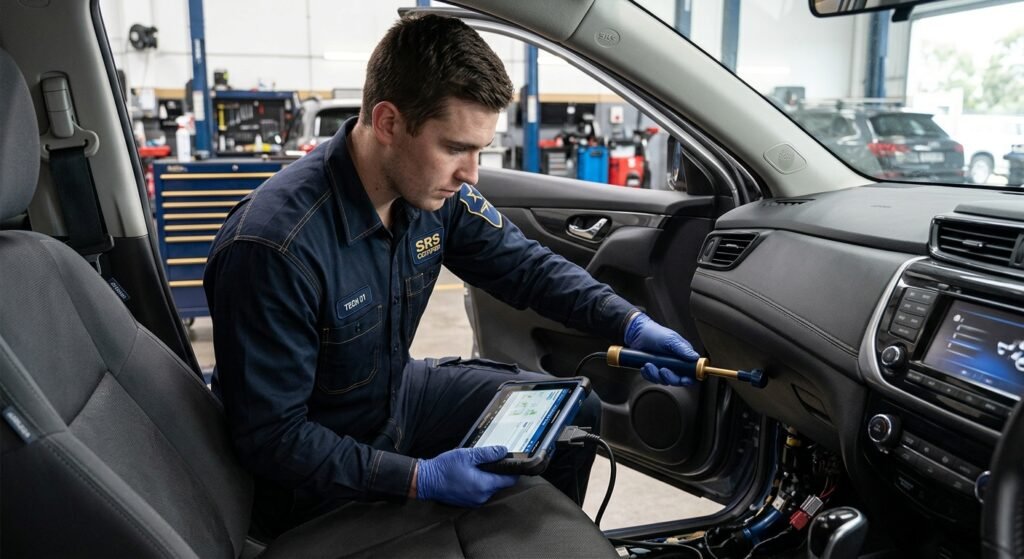
- SRS diagnostics / module work: After replacement, the vehicle’s SRS/airbag control module often needs a scan and sometimes a reset or programming to clear crash data and restore system readiness.
- Location/type of service: Dealer, independent shop, or a mobile specialist will influence the total cost and turnaround time.
Parts vs labor: what usually dominates the bill
In many cases the part itself—especially an OEM pretensioner or a complete seat belt assembly—represents a large portion of the total cost. But on cars where the pretensioner is hard to reach, labor can quickly become the biggest factor.
How to estimate seat belt pretensioner replacement cost (step-by-step)
- Get an SRS scan. A scan will confirm whether the pretensioner has actually fired and whether crash data is stored in the airbag control module.
- Ask for a parts breakdown. Have the shop list whether they’ll replace the pretensioner only, the retractor, the buckle, or the complete belt assembly.
- Confirm labor steps. Request a brief scope of work: seat removal, trim removal, connector disconnects, torque specs for bolts, and estimated hours.
- Find out about module work. If the airbag module contains crash data, it must be reset or reprogrammed; failing to clear crash data can re-enable the warning light and cause safety issues.
- Compare written estimates from at least two qualified providers, and verify warranty terms on parts and labor.
Quick table: factors that affect cost and how to reduce it
| Factor | How it affects cost | How to reduce or control cost |
|---|---|---|
| OEM vs aftermarket parts | OEM parts are usually pricier but guaranteed fit and function. | Ask whether a verified aftermarket or rebuilt belt is available and acceptable for safety and warranty. |
| Labor access | Hard-to-reach pretensioners increase shop time. | Request a detailed labor breakdown; consider mobile specialists who work on safety systems efficiently. |
| Airbag module/reset needs | Module scans, crash data deletion, or programming add diagnostic time and sometimes a separate service. | Choose a provider that includes SRS scanning and module reset so you get a full, safe result. |
Insurance, salvage parts, and warranties
Insurance often covers pretensioner replacement after a crash, but policies and deductibles vary. Salvage or used parts can lower the parts cost, but confirm that the part has not already fired and that it’s structurally sound. Always get warranty terms in writing for both parts and labor; safety-critical components should have clear coverage.
Dealer vs independent shop vs mobile safety specialist
Dealers typically use OEM parts and have factory programming tools; independents can be less expensive and may offer aftermarket parts. Mobile safety specialists who focus on SRS, seat belts, and module programming can be a good balance: they combine diagnostics, module resets, and installation work with an emphasis on safety systems.
Before authorizing work, confirm the provider will perform an SRS scan and clear crash data in the airbag control module if required. LockNCal offers vehicle safety system services focused on seat belt and SRS readiness at https://lockncal.com/vehicle-safety-system-services/ and details about on-site mobile options are available at https://lockncal.com/on-site-mobile-services/.
What about “seat belt repair kits”?
Many online vendors sell so-called repair kits for pretensioners or seat belt webbing. These are not manufacturer-approved fixes for pyrotechnic devices. Pretensioners are single-use mechanisms; attempting to “repair” or rebuild them can be unsafe and may violate vehicle safety regulations or warranty terms. The correct, safe approach after pretensioner deployment is replacement of the pretensioner or the complete seat belt assembly.
How to choose a trusted provider
- Verify the shop performs SRS scans and understands crash data handling.
- Ask for proof of training or experience with airbag/safety systems.
- Request a written estimate showing parts, labor, and any module programming/reset fees.
- Confirm parts source and warranty coverage for the replacement belt or pretensioner.
FAQ
A: Costs vary widely by vehicle, parts source, and labor. Because pretensioners are safety-critical, ask for a written estimate and an SRS scan to get an accurate quote from a qualified provider.
Q: Can a pretensioner be repaired instead of replaced?
A: No. Pretensioners are single-use pyrotechnic devices; repairing them is not manufacturer-approved and is unsafe. Replacement of the pretensioner or complete belt assembly is the correct fix.
Q: Will the airbag control module need work after pretensioner replacement?
A: Often, yes. If crash data is stored or the SRS light is on, the airbag control module usually needs to be scanned and reset or reprogrammed to clear crash data and restore system readiness.
Q: Can insurance cover pretensioner replacement?
A: Insurance may cover replacement after an accident, but coverage and deductibles vary. Provide your insurer with a written estimate and the repair order when filing a claim.
Q: How long will the replacement take?
A: Turnaround depends on parts availability and whether module programming is required. Ask your service provider for a timeline based on the specific vehicle and parts source.
If you need a professional safety-system inspection, pretensioner or seat belt replacement, or an SRS/airbag module scan and reset, learn how we handle these services at https://lockncal.com/vehicle-safety-system-services/ or book an appointment at https://lockncal.com/schedule-your-service-appointment/. For immediate questions call (469) 277-7277.


