 Skip to content

B0001 13 Ram Airbag Code — Causes & Fix
Direct answer: B0001 13 on a Ram means a Driver Frontal Stage 1 Deployment Control fault — a problem in the driver airbag deployment circuit. The correct path is a careful SRS diagnostic: scan for related codes, check steering-column wiring and the clock spring, verify the airbag squib and connector, and then clear or reprogram the SRS module or replace faulty safety components as required.
Not near Dallas–Fort Worth? Mail us your airbag / SRS module.
We reset most airbag control modules by mail — free 2-way shipping and a fast turnaround. We clear the crash data, restore factory settings, and ship it right back, anywhere in the U.S.
Key Takeaways
- B0001 13 Ram = Driver Frontal Stage 1 Deployment Control — a fault in the driver airbag deployment circuit.
- Common causes: clock spring wear, open/short in the squib wiring, poor connector contact, or a stored crash event in the SRS module.
- Diagnosis requires a calibrated scan tool, wiring checks in the steering column, and SRS module data review.
- Fixes are limited to component replacement, SRS module reset/programming, or module replacement — never a board-level “repair” to pyrotechnic devices.
- If the code is active, treat the vehicle as a safety concern and get the SRS system professionally diagnosed before driving long distances.
What B0001 13 (Ram) Actually Means
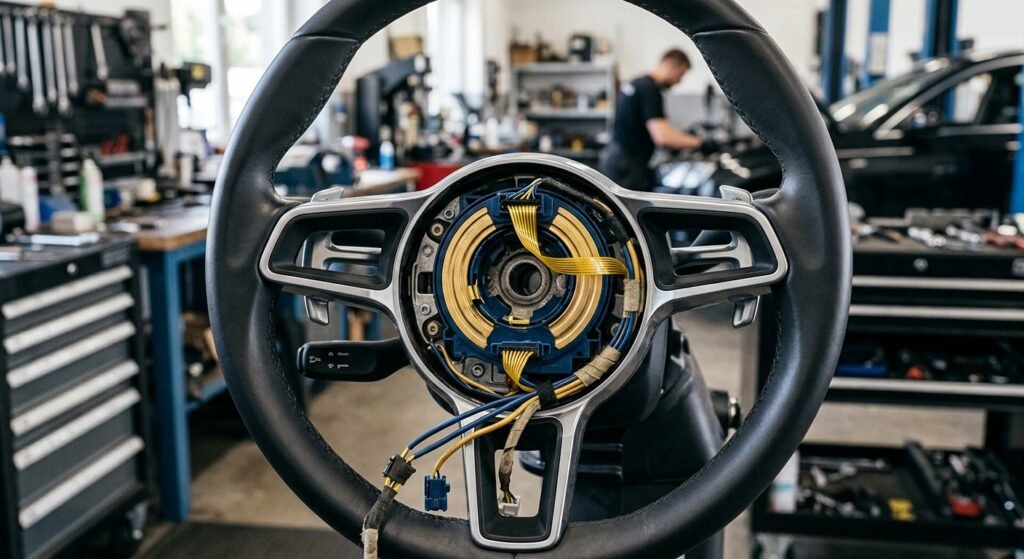
The verified definition: Driver Frontal Stage 1 Deployment Control – a fault in the driver airbag deployment circuit. In plain language, the vehicle’s airbag system has detected a problem where it expects to control the driver’s frontal airbag deployment (stage 1). That detection can come from the airbag squib, the steering-wheel clock spring/spiral cable, connector corrosion, or the SRS control module seeing unexpected resistance or an open circuit.
Typical Causes
- Faulty or worn clock spring (spiral cable) in the steering column.
- Open or short in the driver airbag squib wiring — abrasion where wires pass through the column.
- Poor connector contact at the airbag harness or steering wheel connector (corrosion, loose pins).
- A deployed or partially-deployed airbag or a fired pretensioner elsewhere that stored crash data in the SRS module.
- SRS control module fault, corrupted memory, or required module programming after component replacement.
Common Symptoms You’ll Notice
- Illuminated airbag / SRS warning light on the dash.
- Possible additional SRS codes alongside B0001 13, or a stored crash event code.
- Horn, steering wheel controls, or audio buttons that intermittently fail (if clock spring is involved).
- Sometimes no other symptoms — the code may appear from a continuity check the system runs.
Tools & Prep a Technician Will Use
- OEM-capable SRS scan tool that reads airbag live data and freeze-frame (not a generic OBD-II lamp tool).
- Digital multimeter (DMM) with low-resistance measurement and an appropriate current-limited test setup for squib continuity checks (follow manufacturer safety procedures).
- Steering column trim tools and steering-wheel puller if access requires wheel removal.
- Service manual or factory wiring diagrams for the exact Ram year/model wiring colors and connector locations.
Step-by-Step Technician Diagnosis (Real-World Order)
- Scan the car with an SRS-capable tool and record all codes, freeze-frame, and live data. Note whether B0001 13 is current or stored. Check for crash data stored in the SRS module.
- Disable the battery per safety procedure and wait the required time to discharge system capacitors before touching SRS components.
- Visually inspect the steering-wheel airbag connector, horn pad, and column wiring for damage, corrosion, or disconnected pins.
- Access and test the clock spring/spiral cable continuity. Check for intermittent faults by gently moving the wheel while measuring resistance across the squib circuit; follow factory test values.
- Inspect the harness under the driver dash and along the steering column for chafing or pinch points. Wiggle-test connectors while watching live data on the scan tool.
- If wiring and clock spring test good, check the driver airbag squib continuity at the steering-wheel connector. Never apply more than the manufacturer-specified test current to pyrotechnic devices.
- Review the SRS module’s stored events. If the module shows a crash event, it may need a verified reset or replacement and reprogramming depending on the vehicle’s rules.
- After replacing any faulty safety component (clock spring, airbag, connector), clear codes and perform the required SRS and restraint-system initialization and module programming where applicable.
How the Fixes Usually Break Down
There are three practical outcomes once the root cause is identified:
- Replace the faulty component (clock spring or airbag) and program/reset SRS data as required.
- If the SRS module contains crash data or has stored faults, the module may need a verified reset/clear or reprogramming to restore a functional SRS light state.
- If the module itself is defective, module replacement and programming is the correct action.
Note: Do not attempt board-level repair of pyrotechnic devices, squibs, or SRS modules. A deployed airbag or a fired pretensioner is single-use — replacement is the manufacturer-approved solution.
Quick Reference Table
| Item | Typical Result | Common Next Step |
|---|---|---|
| B0001 13 meaning | Driver Frontal Stage 1 Deployment Control fault | Scan SRS data, inspect steering airbag circuit |
| Clock spring fault | Intermittent steering controls, airbag circuit open | Replace clock spring, reset SRS |
| Wiring/open circuit | Code present, possibly no other symptoms | Repair wiring harness routing and connectors, then reset/module program |
| SRS module with crash data | Codes persist after component replacement | Module reset or replacement & programming |
Is It Safe to Drive?
An illuminated SRS light means the vehicle’s airbag system may not deploy correctly in a crash. Short trips to a safe, qualified service location are usually acceptable, but avoid long highway drives or carrying vulnerable passengers until the system is diagnosed and cleared. If the scan tool shows a crash event or multiple SRS circuits affected, do not delay professional service.
What About “Repair” Kits and DIY Fixes?
Many online products market “airbag repair kits” or board-level fixes. These are not manufacturer-approved for pyrotechnic devices or SRS modules and can be unsafe. The correct, safe approach is replacement of deployed single-use components and professional SRS module reset or programming. If someone offers a cheap board repair for a module or a DIY squib bypass, treat that as risky and noncompliant with safety standards.
When Is Module Reset vs Replacement Required?
If the SRS control module only contains stored crash data or non-permanent faults, a verified module reset or reprogramming can restore normal function. If the module itself has internal hardware failure or is beyond the vehicle manufacturer’s reset rules, replacement and programming are required. Determining which is appropriate requires reading the module’s event history and manufacturer guidance.
Where LockNCal Helps
For owners outside DFW who need a reliable way to clear a serviceable SRS module, LockNCal offers a nationwide mail-in SRS airbag module reset service that can clear crash data and restore the module when the module rules allow. For local DFW customers we provide on-site mobile options. After faulty components (clock spring, airbag, connectors) are replaced by a qualified shop, we can reset or reprogram the module as needed to return the system to normal.
Learn more about the nationwide option at https://lockncal.com/mail-in-airbag-module-reset-service-free-shipping/ and see our broader SRS and safety services at https://lockncal.com/vehicle-safety-system-services/.
FAQ
A: Not necessarily. B0001 13 indicates a fault in the driver frontal deployment control circuit; it can be caused by wiring, clock spring faults, or an actual deployed event if one occurred. A full scan and event-history review tells the difference.
Q: Can I clear the code myself with a cheap OBD-II scanner?
A: Generic OBD-II tools often can’t read or clear all SRS data reliably. Use an SRS-capable scan tool or have a professional read freeze-frame and stored events before clearing codes.
Q: Will LockNCal “repair” my airbag module?
A: LockNCal provides verified SRS module resets and module programming, plus mobile and mail-in services. We do not perform board-level repairs of SRS modules or attempt unsafe fixes to pyrotechnic components. If the module is serviceable we can reset it; if replacement is required we can help with programming steps.
Q: How urgent is this if my SRS light is on but the car drives fine?
A: It’s a safety issue. Short local driving to a qualified shop is usually OK, but you should not ignore the light. Schedule diagnosis promptly, especially if the car was in a recent collision.
Q: How do I get a reset if my vehicle needs one?
A: For nationwide mail-in SRS module reset, see the mail-in service page. If you’re local to Dallas–Fort Worth, we offer mobile airbag module reset service. Start at the appropriate service page or schedule directly.
If you need a verified SRS module reset or programming after a clock spring or airbag replacement, start the process at https://lockncal.com/mail-in-airbag-module-reset-service-free-shipping/ or schedule service at https://lockncal.com/schedule-your-service-appointment/, or call (469) 277-7277.


