 Skip to content

GMC U0155 — Lost Communication With IPC: Causes & Fix
What U0155 means: Lost Communication With Instrument Panel Cluster (IPC). It is a module communication code.
Does LockNCal handle this? No — module communication faults aren’t part of our mobile safety-systems service, so this one is best diagnosed by a qualified repair shop. If the same scan also shows airbag/SRS, ADAS, or key & immobilizer codes, those we do handle — call or text (469) 277-7277.
Direct answer: On GMC vehicles the U0155 code means Lost Communication With Instrument Panel Cluster (IPC). Fixing it requires diagnosing the communication path (CAN/bus) and addressing the root cause — a failed IPC, another module, wiring/fuse/power fault, or a software/programming issue. Often the resolution is module programming, replacement, or targeted wiring repair after a proper diagnostic scan.
Key Takeaways
- U0155 = Lost Communication With Instrument Panel Cluster (IPC) — the IPC is not talking to the vehicle network.
- Common causes: failed IPC, a fault in BCM/ECM, CAN bus wiring, power/ground, or blown fuse.
- Diagnosis must start with a full scan, power/ground checks, and CAN-bus signal verification with a scope.
- Correct fixes include wiring repair, fuse replacement, module programming/reflashing, or module replacement.
- If gauges and warning lights aren’t working, stop driving and get the vehicle diagnosed — missing critical info is a safety concern.
What U0155 Means (Plain English)
U0155 is a network communication trouble code. The vehicle’s control modules exchange data over one or more vehicle bus systems (most modern GM vehicles use CAN). The IPC — the cluster that displays speed, RPM, fuel level, and warning lamps — stopped responding to other modules or stopped sending expected messages. The scan tool reports that the IPC is not present on the bus or is not acknowledging messages.
Symptoms You Might See
- No instrument cluster illumination or backlighting.
- Gauges not moving or showing incorrect/blank readings (speedo, tach, fuel).
- Missing or erratic warning lamps (ABS, airbag, check engine) or persistent communication errors on a scan tool.
- Vehicle may still start and run, but you lack critical driver information.
- In some cases, other modules report multiple network errors — U0155 may be one of several communication codes.
Step-by-step Diagnostic Roadmap
Follow this order to diagnose U0155 efficiently. Doing checks out of order wastes time and risks misdiagnosis.
1. Retrieve freeze frame and network snapshot
Use a capable scan tool and record all active and pending codes across modules (BCM, PCM, IPC, ABS, Airbag). Note whether U0155 is the only code or part of a cluster of network errors.
2. Check fuses and accessory power
Inspect the fuse(s) that feed the IPC and related modules. A lost ignition-switched power or accessory feed will drop the cluster off the bus even if the wiring and module are otherwise fine.
3. Verify power and ground at the IPC
Measure battery and ignition voltage at the IPC connector and check a reliable ground. Intermittent or high-resistance ground often causes communication dropouts.
4. Scan the network topology and node presence
On many scan tools you can see which nodes are responding. Confirm whether the IPC appears at all to the tool. If the IPC is completely absent, the problem is between that module and the bus, or the module itself.
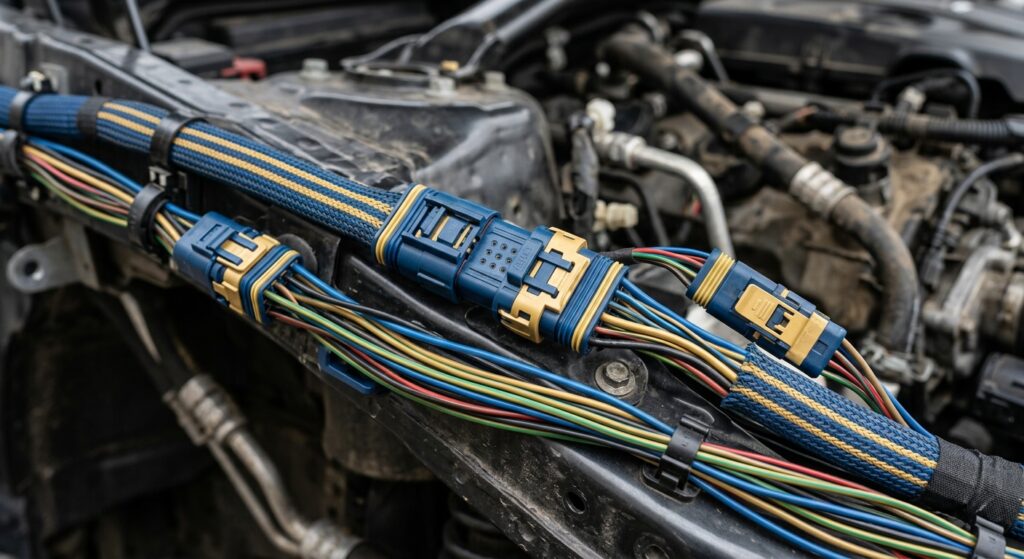
5. Inspect connectors and wiring
Visually and physically inspect IPC connectors, harness routing, and pin retention. Look for corrosion, crushed wires, rodent damage, or aftermarket equipment taps that may interfere with the bus.
6. Check the CAN/LIN signals with a scope
A multimeter can check for voltage but a lab scope shows the real story: proper differential CAN waveform, bus idle voltages, and noise. Intermittent or low-amplitude signals indicate wiring or transceiver faults.
7. Isolate by swapping modules or using bus terminators
If safe and possible, temporarily disconnect suspect modules (not advisable on airbag or safety-critical modules unless you know what you are doing) or use diagnostic tools that show bus load. In shop environments, swapping a known-good IPC or reflashing can confirm the module’s role.
8. Software and programming checks
Sometimes a module will lose calibration or need a reflash after other repairs. If wiring and power are good but communication is still lost, module programming or reflashing may restore proper network behaviour.
Common Causes — Quick Reference Table
| Root cause | What to check | Likely fix |
|---|---|---|
| Blown fuse / no ignition power | Relevant fuses, ignition feeds at IPC | Replace fuse, restore power source |
| Poor ground | Ground continuity and resistance | Clean/restore ground, tighten fastener |
| Damaged CAN wiring or connector | Visual harness inspection, continuity, scope | Repair wiring/harness, replace connector |
| Faulty IPC module | Node not present on scan, confirmed wiring OK | Reprogram or replace IPC |
| Other module interfering (BCM/ECM) | Cluster of network codes, bus load checks | Diagnose/reprogram offending module |
When is it Safe to Drive?
If the IPC loses communication it can remove access to speedometer, fuel level, warning indicators, and other safety alerts. If you lose the ability to see your speed or warning lamps (airbag, ABS), stop driving. If the engine runs normally and only a non-critical gauge is affected, you may reach a safe shop, but avoid highway speeds and long trips until the fault is fixed.
Why a DIY scan often isn’t enough
Basic OBD-II readers will show U0155 but won’t reveal bus waveforms, node presence across modules, or intermittent high-resistance grounds. Proper diagnosis typically requires a bi-directional scan tool, wiring checks, and a scope — plus controlled reflash/programming to restore or configure modules.
How This Relates to LockNCal Services
U0155 is a network/module communication issue. The right technical route is professional diagnostics and, where required, module programming or replacement. LockNCal provides module programming services and on-site diagnostics as part of our mobile offerings, and we can help identify if the IPC needs programming or a replacement. For vehicle safety-related modules, see our vehicle safety system services page for related capabilities like occupant module work and SRS services.
Practical Tips for Owners
- Record all codes and symptoms before visiting a shop — a good scan session often points directly to the likely module.
- Avoid aftermarket stereo or alarm installations until the bus is healthy — these are common sources of CAN issues.
- If multiple modules have communication faults after a collision, expect wiring harness damage near the impact area.
- Always address missing speedometer/warning lights immediately — these affect safe operation.
FAQ
Q: What exactly does U0155 mean?
A: U0155 is the diagnostic code for Lost Communication With Instrument Panel Cluster (IPC) — the IPC isn’t responding on the vehicle network.
Q: Will replacing the IPC always fix U0155?
A: No. Replacing the IPC without diagnosing power, ground, and bus wiring can fail. Only replace the module after confirming the module itself is faulty; often programming or wiring repair is the correct fix.
Q: Can I drive my GMC with a U0155 code?
A: If you’ve lost gauges or critical warning lights, it’s unsafe to drive long distances or at high speed. If the vehicle runs and only a non-critical display is affected you may drive carefully to a shop, but get it diagnosed promptly.
Q: How do technicians confirm the IPC is the problem?
A: Technicians use a full-system scan, check fuses/power/grounds, inspect connectors, and verify CAN signals with a scope. If wiring and power are OK but the node doesn’t respond, the IPC is likely at fault and may need programming or replacement.
Q: Does LockNCal fix U0155?
A: LockNCal offers professional module programming and mobile diagnostics that diagnose communication faults and perform the necessary programming or replacement workflows. Book an appointment so we can inspect your vehicle’s network and recommend the correct fix.
Need help diagnosing U0155 on your GMC? Schedule a professional diagnostic or module programming service and we’ll walk the network, verify power/grounds, and restore communication safely. Book online: Schedule an appointment or call (469) 277-7277 for assistance.


